A useful shopping bag must do two jobs: carry what you buy and be there when you need it. A strong tote left in a kitchen drawer does neither. I’d choose a shape that fits your usual trip, then keep it with your keys or the bag you take to work.
These five reusable green shopping bags cover small market stops, shoulder loads, loose produce, and large hauls. None wins every task. Start with what you already own. Add a bag only when it solves a gap.
Which reusable grocery bags fit your trip?
| Bag | Where it makes sense |
|---|---|
| Standard BAGGU | An everyday tote that folds into a small pouch |
| ChicoBag Vita | A shoulder bag with its pouch attached |
| ECOBAGS Mini String | A few large pieces of produce |
| Envirosax Sun Kissed | A light, bright bag that rolls down small |
| IKEA FRAKTA | Bulky loads, laundry, and packaged goods |
1. Standard BAGGU: my everyday pick
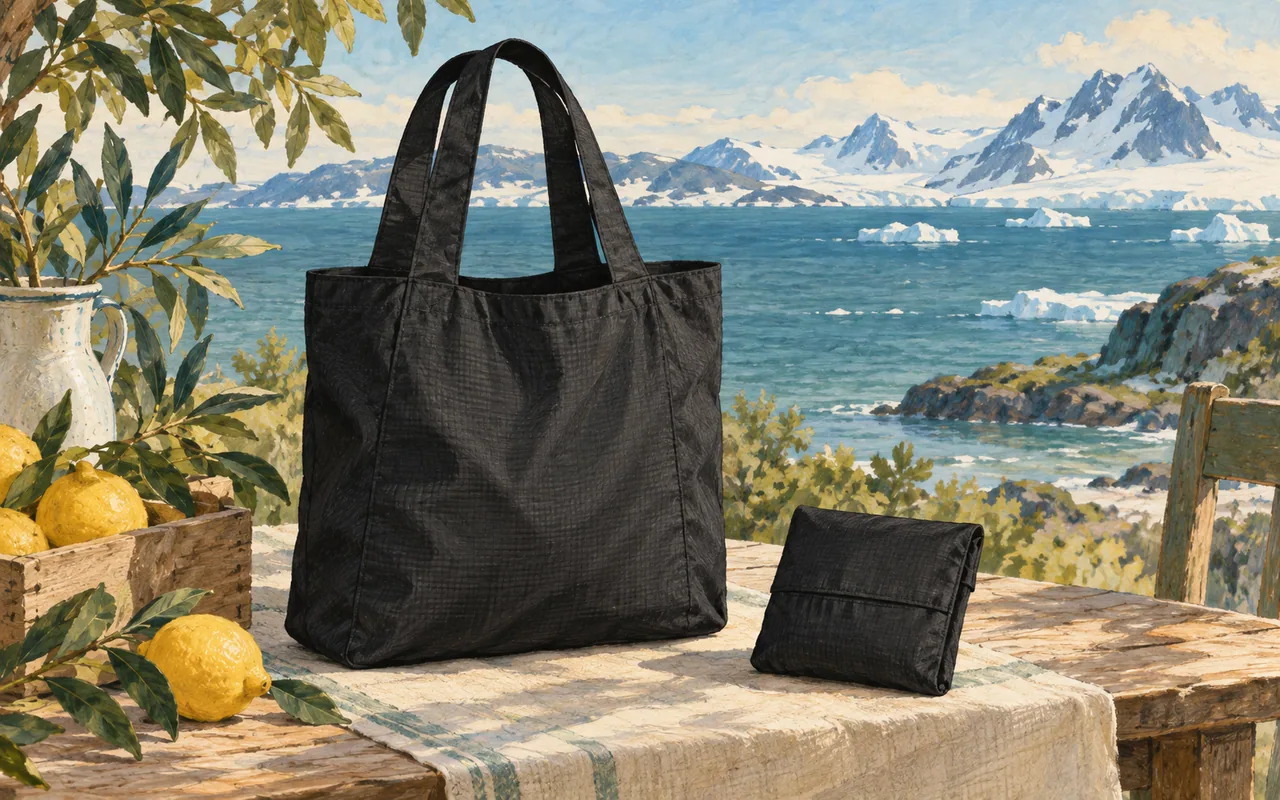
The Standard BAGGU uses recycled ripstop nylon and folds into a separate five-inch-square pouch for easy storage. The brand lists a 50-pound capacity and says the bag is machine washable. Its open top and soft sides make it easy to load.
I like this balance for grocery shopping on foot. It packs small enough to tuck into a purse before you know you need it. The drawback is the loose pouch. If you tend to lose small things, give it one set pocket or choose an attached-pouch bag.
A high weight limit does not make a heavy load pleasant to carry. Split jars and cans between bags. Put a firm item at the base, then keep bread and soft fruit near the top.
Good points: Machine washable; packs into a small pouch.
Trade-offs: The separate pouch can go missing; the soft base offers little structure.
2. ChicoBag Vita: keep the pouch attached
The ChicoBag Vita rePETe + Refine is a shoulder tote with a built-in stuff pouch. ChicoBag lists a 40-pound carrying capacity. The fabric uses recycled material, and the bag can be machine washed.
That attached pouch is the main draw for me. There is no spare piece to set down at the checkout. Stuff the bag back in when you unpack, and it is ready for the next trip.
Long handles help when your hands are full. They can also make a bag hang low if you carry it by hand. Think about your height and how far you walk. I’d keep a smaller load in this soft shape when the route includes steps or a crowded bus.
Good points: Attached pouch; shoulder-length handles.
Trade-offs: Unstructured shape; long handles may hang low.
3. ECOBAGS Mini String: for a small produce stop
The ECOBAGS Organic Cotton Mini String Bag is a small net tote with short handles. The maker lists a load of more than 15 pounds and recommends a cold machine wash followed by air drying.
Its open mesh suits large items such as oranges or a head of cabbage. It does less well with small loose goods. A pen, key, or tiny piece of fruit can slip through a gap. Use a separate container for those.
I’d treat it as a compact produce bag, not a full weekly-shop carrier. The short handles suit a hand or wrist. They do not give it the same shoulder carry as the Vita. Check that this is the smaller version, called Mini, before buying.
Good points: Folds small; open mesh holds bulky produce.
Trade-offs: Small items need another container; short handles.
4. Envirosax Sun Kissed: a bright bag you may remember
The Envirosax Sun Kissed Bag 4 is made from lightweight polyester with reinforced seams. Envirosax says it has been load tested to more than 44 pounds. The brand describes the fabric as water resistant.
I see bright colors as a practical plus if they make a bag easier to spot in your coat or hall. That is a preference, not a reason to replace a plain tote that works. Choose the design you will keep using.
Polyester is a plastic fiber. This bag can replace many throwaway carriers, but it is not plastic-free. Its soft sides also call for careful packing. Water-resistant fabric does not make an open-top shopping bag a dry bag.
Good points: Rolls down small; reinforced seams.
Trade-offs: Polyester is not plastic-free; soft sides.
5. IKEA FRAKTA: for the large, awkward load
The large IKEA FRAKTA has a 19-gallon capacity, two handle lengths, and a listed 55-pound load limit. The current US model uses polypropylene with at least 90 percent recycled content. It costs $0.99 on IKEA’s US page.
I’d use it for laundry, a move, or bulky packaged goods. Owner comments on the product page also describe using it for moves and other large loads. Those accounts suit the shape, but they do not prove how long your bag will last.
Two limits matter: IKEA says to wipe it clean, not wash it, and it is not approved for food contact. Keep bare produce in a suitable food bag. Its low price is useful; its wide shape is less handy on a packed train.
Good points: Large capacity; low purchase price.
Trade-offs: Wipe clean only; not approved for food contact.
What makes a shopping bag a greener choice?
Material is one part of the answer. Making a bag takes resources. How often you use it, how much it carries, how you wash it, and what happens at the end all matter. The UN Environment Programme’s review of bag life-cycle studies shows why there is no single material that wins in every measure.
I would not buy a new cotton tote just to replace a sound nylon one. Keep the bag you have, fix a small tear if you can, and use it again. A recycled-content claim is useful detail. It is not a whole-life score.
Think in trips rather than a drawer full of bags. One compact tote for small stops and one larger carrier may cover your week. If they do, there is no need to collect all five.
Recycled bags still need repeat use
Recycled bags use recovered material for some part of their fabric or parts. They still take work to make and ship. Buy for a long lifespan, not just a label. A durable seam and handles that suit your load can help keep a bag in use and out of landfill.
Pack for the walk home
Give heavy items a firm base
Lay heavy items low in the bag. Keep soft fruit, eggs, and bread above them. Two modest loads may feel better than one bag filled to its stated limit. The bag’s rating does not tell you what is safe or comfortable for your body.
Keep raw meat, poultry, seafood, and eggs apart from other food. The FDA’s food handling advice applies in your grocery bags as well as in the fridge. A leaking pack can spoil more than the tote.
Reserve grocery bags for food. Carry shoes, gym kit, and beach gear in another bag. If you need a padded space for work gear, the Mobile Edge briefcase serves a different job from these open shopping totes.
Clean it, dry it, put it back
Care differs by type of fabric
Read the care label before washing. Nylon, cotton net, and woven plastic do not all need the same treatment. Clean spills soon, and let the bag dry fully before you fold it away. A damp bag pushed into a pouch is a poor start to the next shop.
A bag that must be spot cleaned should not go into the washer. For a bag that calls for cold water, keep to that setting. Good care can help preserve its shape and quality. Check handles and seams when you unfold it, especially before packing glass jars.
For bags that allow machine washing, our unscented laundry detergent guide compares powders, tablets, pods, and liquids. Use the dose on the pack and the cycle allowed by the bag maker. A grocery tote does not need a heavy scent to smell clean.
Once it is dry, put it straight back in the place it leaves from. I’d keep reusable shopping bags beside the door or inside a work bag. If you drive to the store, put clean, dry spares in the car. The best reminder is a bag you can see.
Do you need a new reusable bag?
If your current bag holds the load, can be kept clean, and comes with you, keep it. Replace it when worn seams, a broken handle, or a poor fit makes it hard to use.
For a first compact shopping tote, I’d choose the Standard BAGGU. Pick the Vita if an attached pouch matters more. Choose the Mini String for a few large vegetables, the Envirosax for a light printed tote, or FRAKTA for bulk. The useful choice is the one that earns another trip.